
We review current product information, care guidance, and purchasing considerations to help you compare options. Always confirm the final specifications, price, and retailer policies before ordering.
In this guide
The short version
Avery is an appealing starting point for a home business that has outgrown printing every label itself. Its WePrint service, now presented as custom printing on the U.S. site, offers professionally printed labels and other branded materials. Our recommendation is conditional: settle the design, container, and material before ordering a large batch. A neatly printed label is still wasted money if it peels off your bottle or carries yesterday’s ingredients.
This is a research-based U.S. review of official information and public customer feedback, not a hands-on print or adhesive test. Simply Room may earn a commission through merchant links.
Choose the job before the format
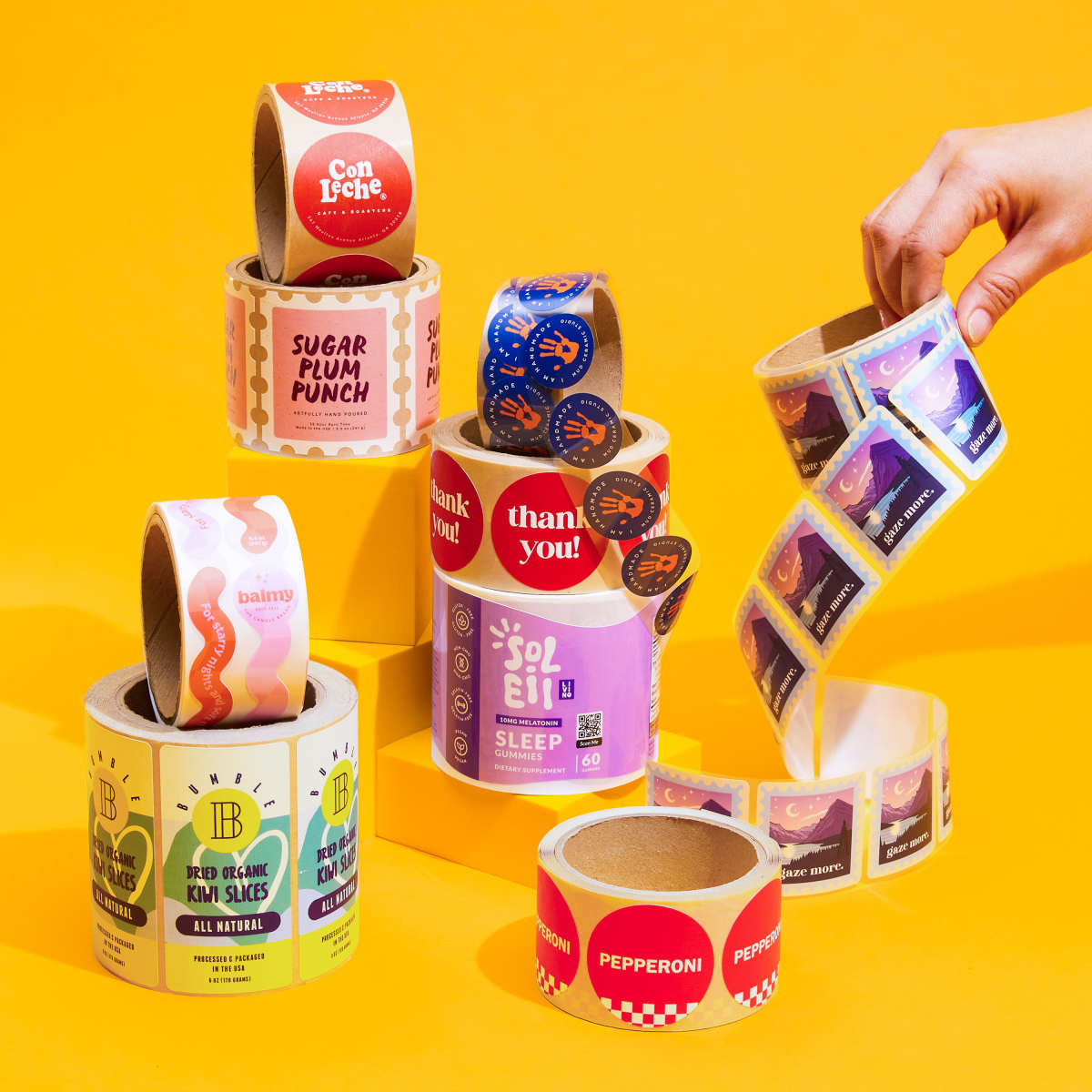
The catalog includes sheet labels, rolls, stickers, cards, and pouches. Sheets suit experiments and smaller batches; rolls are useful for repeated application. Avery also sells blank labels for printing yourself, so check which service you are buying. A pack of blanks and a professionally printed run are different purchases.
For pantry jars or a changing home inventory, printing a few labels on demand can be more practical than ordering finished stock. For a repeat candle, soap, or packaged-gift design, outsourcing may save time spent feeding sheets, replacing ink, and troubleshooting alignment. We would compare the cost of usable labels, including failed sheets and labor, rather than compare the advertised price of paper alone.
Material choice deserves a real trial
The roll-label calculator offers paper and film options, including textured paper, removable paper, and clear or white BOPP film. These are different design choices, not interchangeable upgrades. Texture can suit a dry gift box; a clear label raises different questions about contrast and white ink.
Before committing, check the exact material’s resistance claims and adhesive suitability against the actual container and storage conditions. A bottle handled with wet hands is a different job from a cardboard sleeve. Neither a glossy photograph nor the word “premium” proves performance in your use. Avery offers material sample packs; those samples are not your custom design. We would inspect a sample and then buy a small printed run to judge fit, legibility, and appearance on the intended packaging.
Artwork and color are the main homework
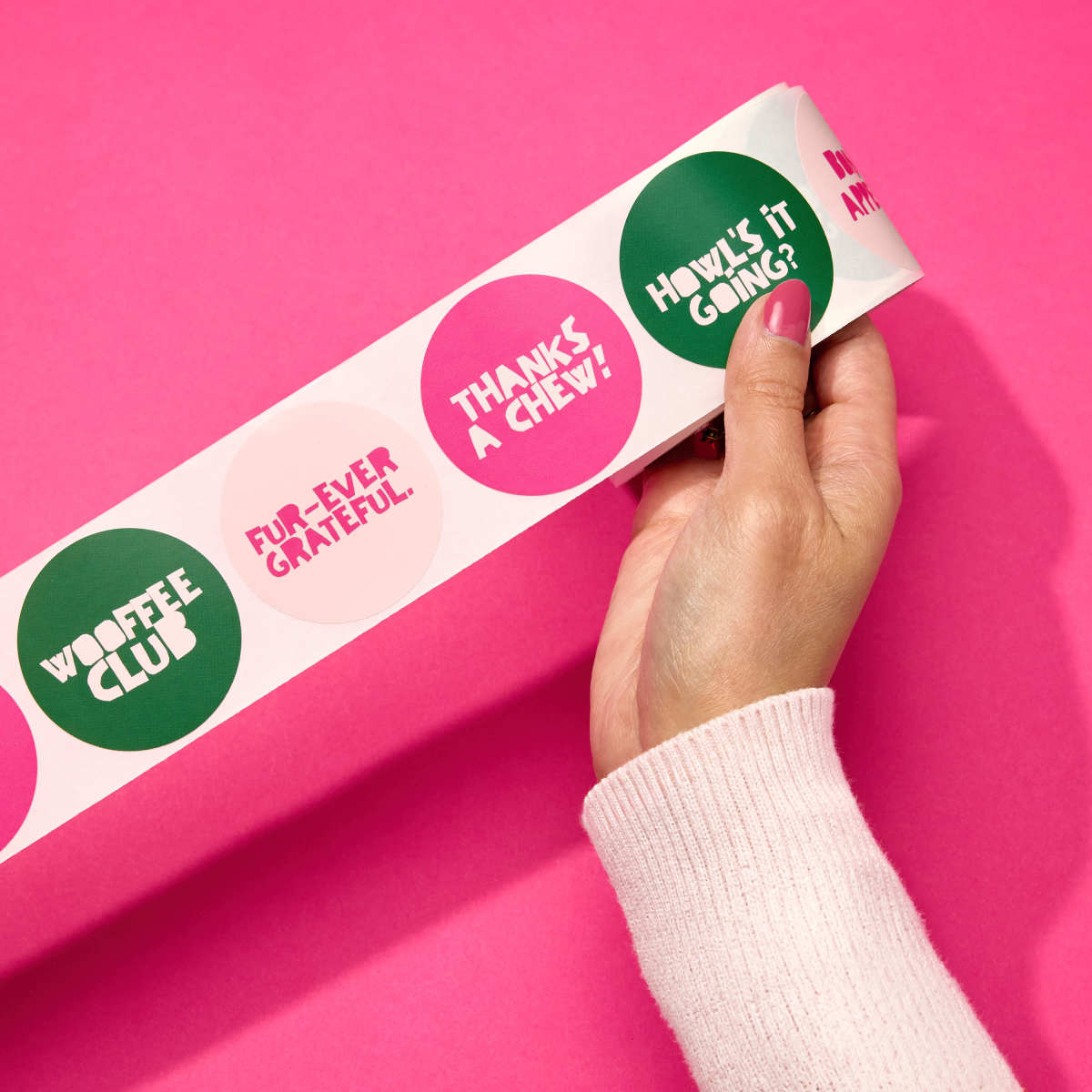
Avery’s artwork guidelines call for at least 300dpi at final print size, embedded graphics, and embedded or outlined fonts. They specify a 1/16-inch bleed outside the cut and a 1/16-inch safety margin inside it. That matters when a narrow border or tiny address sits near the edge: small cutting differences become very visible in a repeated pattern.
The guidelines accept RGB and CMYK artwork, but recommend CMYK and explain that screen colors cannot be matched exactly by an electronic proof. Pantone colors are converted to a nearby CMYK equivalent. If a particular brand color matters, ask about a printed proof rather than approve a glowing laptop preview. White underprinting for roll labels also needs attention when using clear or metallic stocks; confirm the intended effect before production. A proof checks layout much better than it predicts every material and lighting combination.
Customer feedback: separate printing from software
Avery’s own storefront highlights buyers pleased with label appearance and repeat orders. Independent feedback is more mixed. The Avery.com Trustpilot page includes praise for service and print results alongside complaints about the design tool and lost work. These reports cover more than WePrint, so they cannot establish a defect rate for this particular service.
In a candle-making discussion, one buyer was pleased with a first WePrint order and support; in a printer discussion, another customer questioned ongoing outsourcing costs. Both are anecdotes. Together they suggest useful questions: does your design workflow stay reliable, and does the reorder price still make sense at your volume? Save your artwork independently, download the proof, and keep the specification with the order. A positive review of someone else’s jar label cannot answer those questions for your project.
U.S. delivery: leave room for proof approval
The current custom-printing page advertises dispatch in two to four business days, but roll and pouch orders require an additional proof approval before production. Treat a dispatch estimate as different from an arrival promise. Confirm the date for your product and address at checkout, especially before a market stall or event.
The official artwork page’s shipping footnote limits the free-shipping offer to economy service, with at least $75 in merchandise after discounts and before tax, for the continental United States and Puerto Rico. Offers can change. Do not assume the same terms apply to Alaska, Hawaii, or an accelerated service. Include tax, delivery, proof costs if applicable, and the quantity you will actually use when comparing quotes. Buying surplus labels to avoid postage is a poor saving if the design will change.
Cancellations and refunds have different rules
Avery’s custom-printing FAQ states that an order can be canceled within 30 minutes; changes to artwork, materials, and quantities require canceling and reordering. Once submitted, treat the job as time-sensitive rather than something you can revise tomorrow. Finish checking spelling, dimensions, and versions before paying.
The U.S. refund policy asks customers dissatisfied with products or custom printing bought directly on Avery.com to contact Consumer Care within 90 days of receipt. It warns that some items may incur an order processing fee and that shipping and handling are not refunded. Purchases through another retailer follow that seller’s return process. This is a route to discuss a problem, not a promise that every change of mind produces a full refund. Photograph defects, retain packaging and proofs, and explain the requested remedy promptly.
Our verdict
We would shortlist Avery WePrint for repeat packaging jobs where the buyer can supply finished artwork and test the chosen stock before scaling up. Its range is useful, but the buying decision belongs to the exact material, finished label size, and delivered quote.
Start smaller when your branding or packaging is still changing. Pause if the job depends on exact color matching without a physical proof, an untested adhesive, or a delivery date with no buffer. For an established design that works on the real container, outsourcing can be worthwhile. For a few labels that change every week, keeping production at home may still be the better fit.
Before you order
Check the exact model, current price, return terms, and manufacturer instructions. Save the listing and order details so you can refer to them later.
Explore the brand guide ↗